Europe
Les Films du 3 Mars (F3M) invites you to discover thematic cinema about Europe. From fiction to documentaries, long and short, enjoy the best of Québécois and Canadian filmmaking !
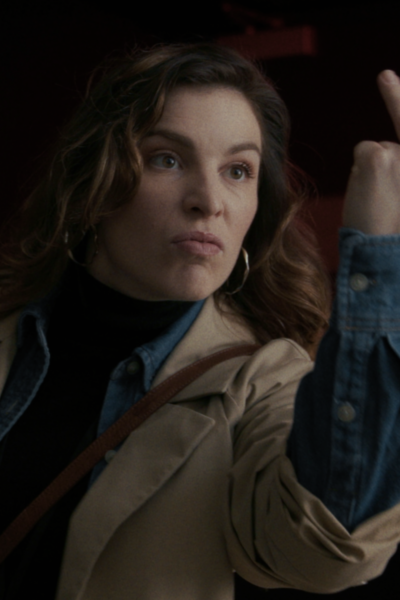
NOWHERE, EVERYWHERE
91 min, Documentary, Canada, Atmos
A cross between a journalistic investigation, a sci-fi thriller, an activist documentary and a portrait of an artist in the throes of creation, this playful, biting and rigorous hybrid film exposes the reality of tax havens and their consequences.
Read more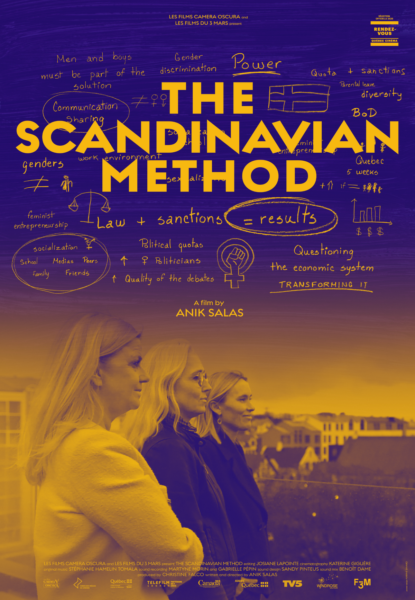
THE SCANDINAVIAN METHOD
93 min, Documentary, Canada, 5.1
Filmmaker Anik Salas travels to Scandinavian societies – world leaders in gender equality – to understand the key to their success. Part investigation, part manifesto, her documentary reveals one essential truth: change does not happen by magic, but through political will and concrete strategies. An urgent, fiercely committed film that refuses to postpone equality to another century.
Read more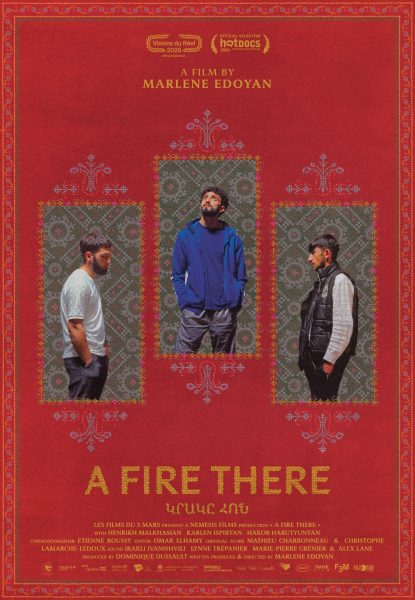
A FIRE THERE
95 min, Documentary, Canada, 5.1
An impressionistic portrait of life in an Armenian village in southern Georgia, this intimate film follows three friends on the cusp of adulthood, caught between tradition and the desire to forge their own path.
Read more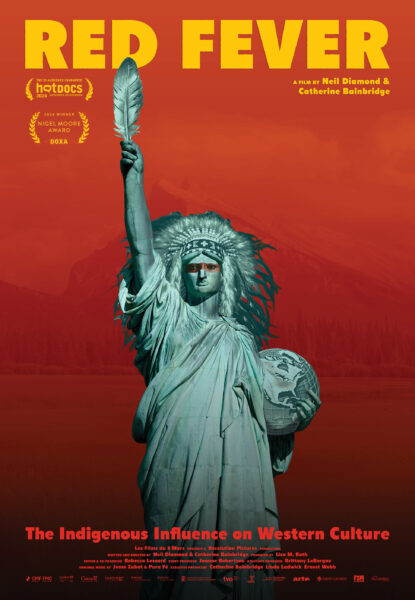
RED FEVER
104 min, Documentary, Canada, 5.1
Red Fever follows Cree co-director Neil Diamond on his journey to find out why the world is so fascinated with the stereotypical imagery of Native people that is all over pop culture.
Read more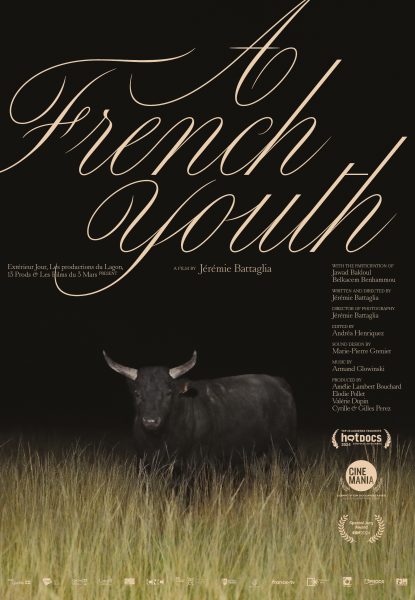
A FRENCH YOUTH
84 min, Documentary, Canada, France, 5.1
In the south of France, Jawad and Belka, two young men from North African origin free themselves through their passion for Camargue races. Much more than a traditional fight, this confrontation in front of a bull allows them to take their place in the arena as well as in French society. But at what cost?
Read more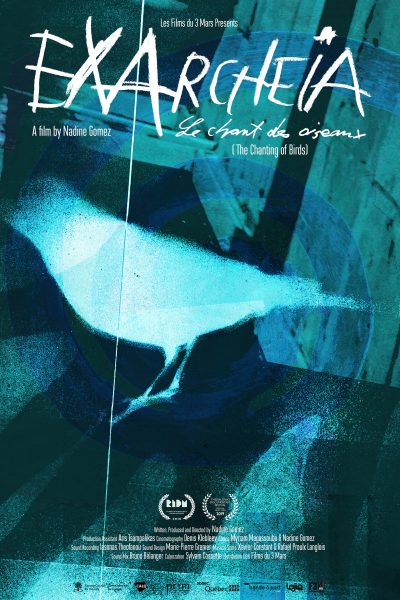
EXARCHEIA: THE CHANTING OF BIRDS
73 min, Documentary, Canada, 5.1
Shot as a nocturnal stroll through one of the most political and lively neighbourhoods of Athens, EXARCHEIA is a poetical and polyphonic essay that dives into a place where living together is first and foremost a matter of shared speech and hopes held in suspense.
Read more